Parshat Mishpatim: Learning By Trying-On
Parshat Mishpatim opens not with thunder or spectacle, but with details.
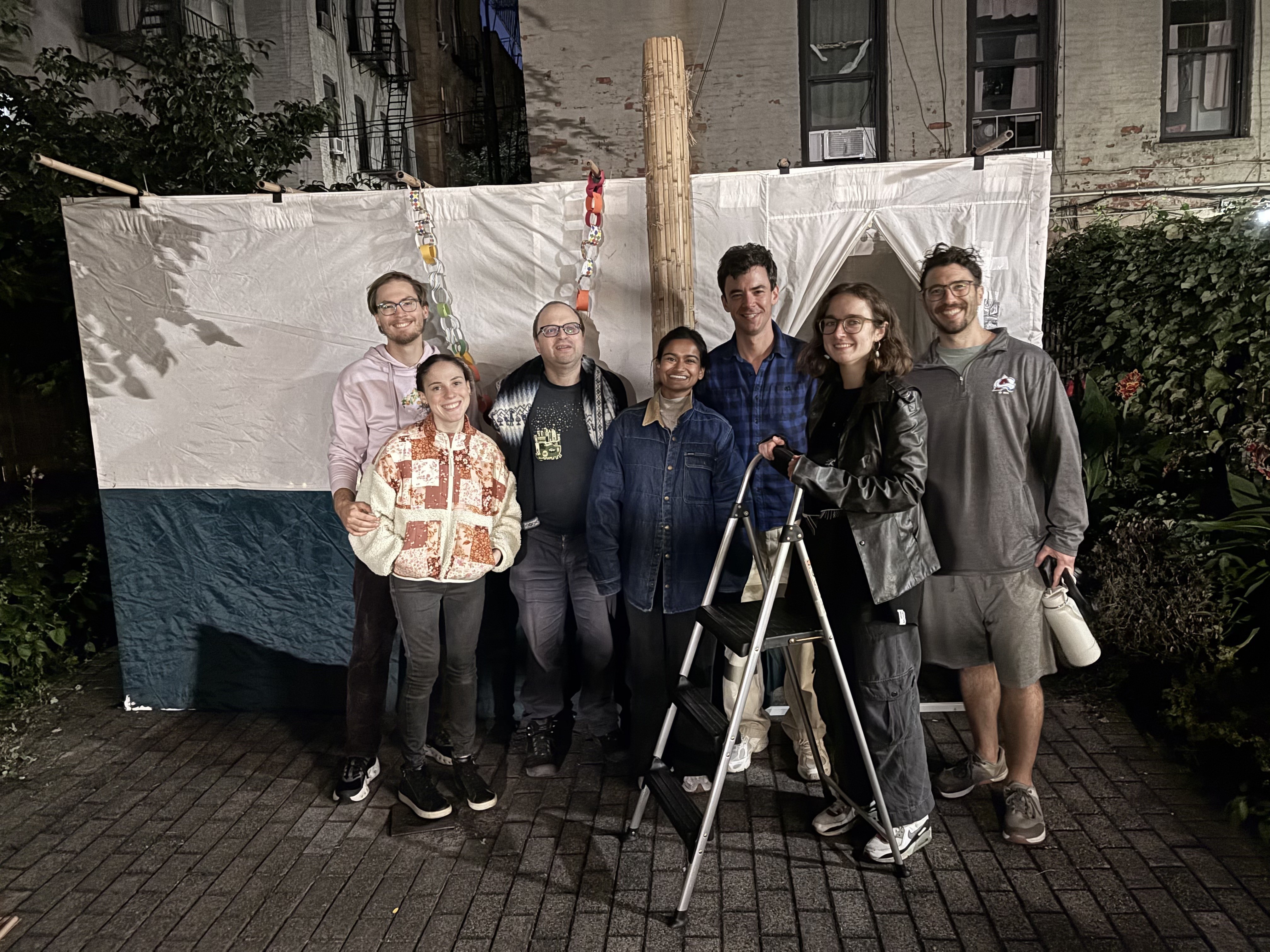
Welcome to Torah in Harlem! As we move through each week, we’ll explore the stories and insights of the weekly Torah portion—the ancient text at the heart of Jewish life—and let them inspire conversation in our community. Our hope is to cultivate a gathering place where learning belongs, reflection brings joy, and we can all grow together.
Artwork by Hillel Smith.
Parshat Mishpatim opens not with thunder or spectacle, but with details: laws about workers and neighbors, responsibility and repair, how we live with one another day to day. And yet hovering over all of this practical instruction is one of the most daring spiritual statements in the Torah. When the people stand at Sinai, they say: Na’aseh v’nishma — we will do, and we will listen. Not we will understand and then act, but the reverse. We will step forward first. Meaning will follow.
The medieval commentator Rashbam—Rabbi Shmuel ben Meir, a 12th-century French scholar and grandson of Rashi—offers a beautifully grounded reading. He explains that the people are saying: We will do what God has already commanded, and we are ready to listen for what God will yet command, from here on. Action is not the end of learning; it is the beginning of a relationship that continues to unfold. Torah, in this telling, is not a closed book but an ongoing conversation—one that assumes we will grow into it over time.
Read this way, na’aseh v’nishma becomes a theory of learning. We don’t wait to feel fully fluent before we begin. We don’t require mastery before participation. We learn Torah the way we learn to cook, to parent, to show up for a community, to love another human being: by trying, stumbling, practicing, and only then discovering what the experience is teaching us. Understanding is not a prerequisite; it is a byproduct of engagement.
For our community, this is a gentle but powerful invitation. Growth doesn’t only come from reading about things or talking about them—it comes from doing. From lighting candles even when the words feel unfamiliar. From hosting, volunteering, leading, or simply showing up when it would be easier to stay on the sidelines. Na’aseh v’nishma reminds us that skill, confidence, and wisdom are cultivated through action. This Shabbat, may we give ourselves permission to begin—even imperfectly—and trust that meaning will meet us on the way.