Parshat Terumah: What We Place in the Ark
The Torah lingers in exquisite detail over how the Mishkan (the portable Sanctuary in the wildnerness) is to be built, as if to say: holiness lives in the particulars
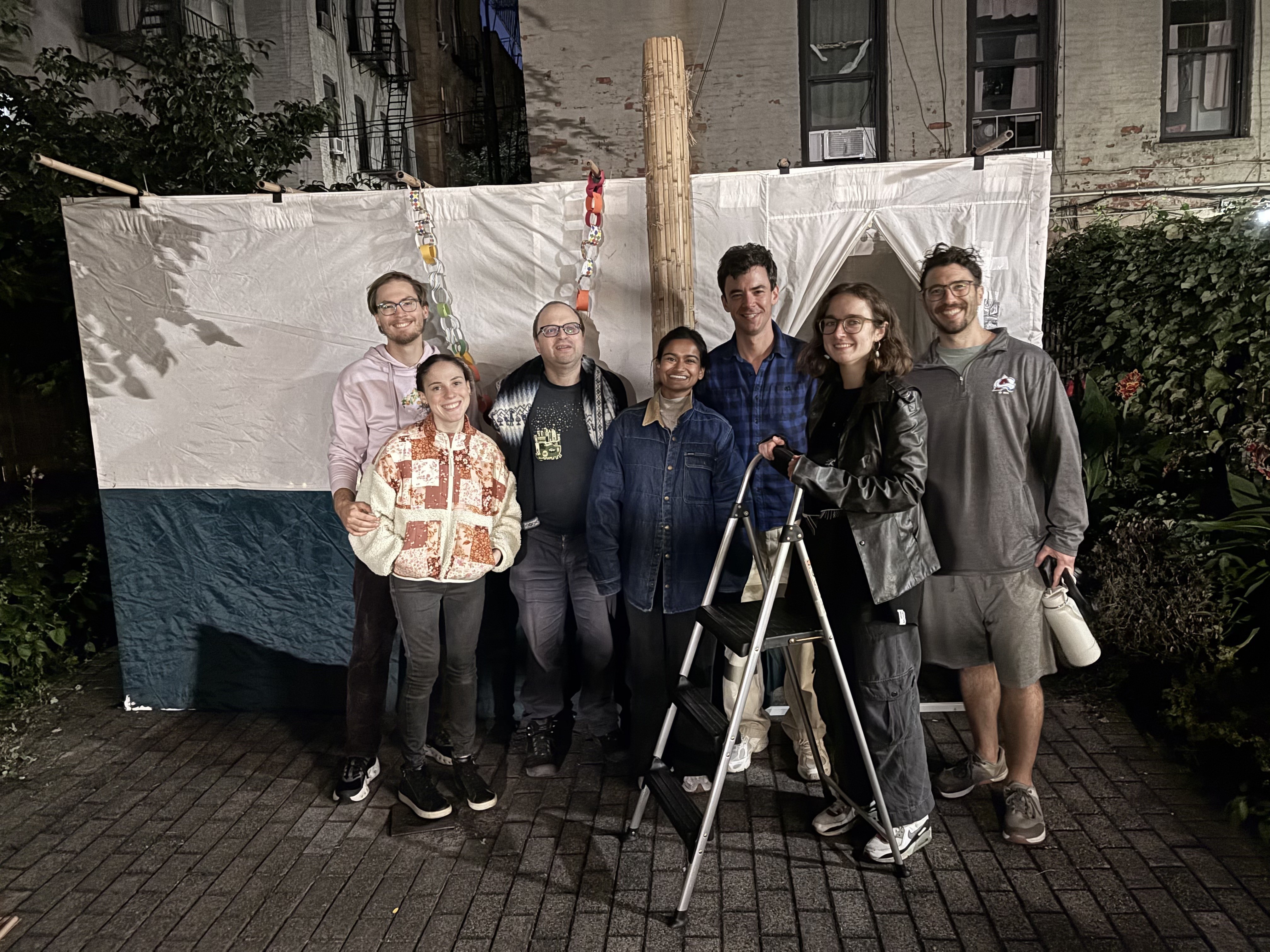
Welcome to Torah in Harlem! As we move through each week, we’ll explore the stories and insights of the weekly Torah portion—the ancient text at the heart of Jewish life—and let them inspire conversation in our community. Our hope is to cultivate a gathering place where learning belongs, reflection brings joy, and we can all grow together.
Artwork by Hillel Smith.
Parshat Terumah unfolds like an architect’s blueprint. Measurements. Materials. Clasps of gold and acacia wood. Curtains dyed in techelet and argaman. The Torah lingers in exquisite detail over how the Mishkan (the portable Sanctuary in the wildnerness) is to be built, as if to say: holiness lives in the particulars. And yet, nestled inside all of this instruction is a simple line: “וְנָתַתָּ אֶל־הָאָרֹן אֵת הָעֵדֻת” — “And deposit in the Ark the Pact that I will give you” (Exodus 25:16). The Ark, the beating heart of the Mishkan, is meant to carry the tablets. But which tablets?
In Talmud Bavli, tractate Bava Batra 14b, Rav Yosef reads the verse expansively: not only the second, whole tablets were placed in the Ark, but also the shattered pieces of the first set — the ones Moshe will break in a moment of rupture upon witnessing the people building a Golden Calf, a few chapters ahead. In this read, the Ark was constructed from the get-go not only to contain perfection, but also to fragments. The covenant renewed, and the covenant broken. Side by side. The Talmud seems insistent on this image. Why? Perhaps because a community that only honors what is polished and intact is not sturdy enough to hold real life. Our tradition imagines the holiest vessel carrying both wholeness and fracture.
There is a powerful message here for community life. If the Ark itself makes room for broken pieces, then our communities must as well. We each carry moments of disappointment, misjudgment, and loss. We carry relationships that did not unfold as we hoped, projects that fell apart, and words we wish we could take back. Terumah teaches that building communities does not require us to hide those pieces. It asks us to create communities strong enough to hold both what is whole and what is broken — trusting that the Divine presence rests not in perfection, but in the honest carrying of our shared story.