Parshat Tazria-Metzora: Something Like a Plague
Jewish tradition sometimes invites a plain kind of honesty about our circumstances when we are awash in uncertainty..
We live in a world of uncertainty. No scholar, no leader, no news alert can always tell us what is happening or what will happen next. So much of life is unpredictable, and that unpredictability can leave us feeling vulnerable, insecure, and finite. When that happens, we often lunge toward one of two strategies: either trying to prevent all bad things from happening, or trying to redeem them immediately with a lesson. Jewish tradition, though, sometimes invites a more plain kind of honesty about our circumstances.
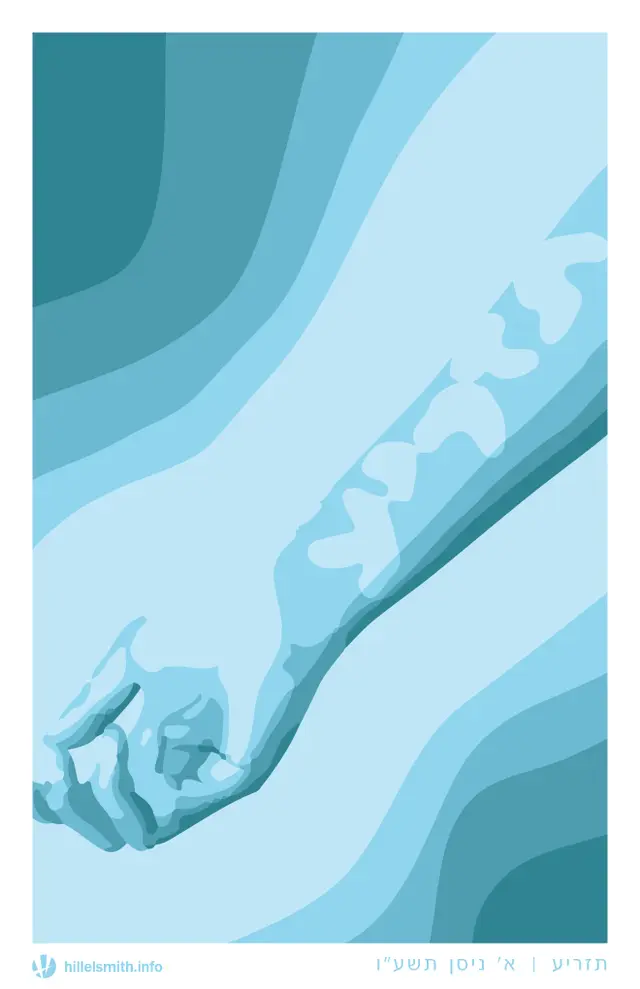
In this week’s parsha, the Torah describes the strange case of tzaraat (a lesion, often translated incorrectly as leprosy) appearing not only on people's bodies, but in the walls of a house. The homeowner comes to the Kohen and says not “there is definitely a plague in my house,” but k’nega nir’ah li babayit — “something like an affliction has appeared to me in the house.” Before anything drastic happens, the house is emptied and closed up for seven days. There is waiting. There is inspection. There is uncertainty. The rituals around tzaraat do not rush toward resolution. They do make space for the possibility that what is happening is real, frightening, and not yet fully understood.
The French medieval commentator Rashi suggests that this apparent affliction may actually be good news: perhaps there is treasure hidden in the walls, and tearing apart the home to remove the plague is what makes it possible to find it. This is a deeply human instinct — to search for meaning, to say maybe this suffering is here for a reason, maybe there is something to learn, maybe something good is hidden inside the ruins. Sometimes that idea can be comforting. Sometimes it can be infuriating.
The Aish Kodesh, preaching from the darkness of the Warsaw Ghetto, offers a more chastened and bracing wisdom about these same verses: a person cannot know whether what is happening is a meaningful challenge or a meaningless injury. All one can honestly say is: it looks like an affliction. We do not know.
Not every moment calls for overconfident bluster, and not every wound can be wrapped up in a lesson. We are sometimes simply waist-deep in uncertainty. And yet there is strength in naming that reality truthfully. Maybe our job is to move through these unnerving, impossible, frazzled days, and to live today (just today) with honesty and courage.
—
Welcome to Torah in Harlem! As we move through each week, we’ll explore the stories and insights of the weekly Torah portion—the ancient text at the heart of Jewish life—and let them inspire conversation in our community. Our hope is to cultivate a gathering place where learning belongs, reflection brings joy, and we can all grow together. Want to hop into the conversation? Join our Torah in Harlem Whatsapp Group.
Artwork by Hillel Smith.