Parshat Chukat: Snakes on a Plain
In Parshat Chukat, the Israelites are tired. The road is long, the detour around Edom feels endless, and the people’s spirit grows short. They speak against God and against Moses: “Why did you bring us up from Egypt to die in the wilderness?”
In Parshat Chukat, the Israelites are tired. The road is long, the detour around Edom feels endless, and the people’s spirit grows short. They speak against God and against Moses: “Why did you bring us up from Egypt to die in the wilderness?” In response, God sends nechashim serafim, fiery serpents, who bite the people. Rabbi Samson Raphael Hirsch, a major 19th-century German rabbi and Torah commentator, reads this not as God suddenly creating a new danger, but as God releasing the danger that had always been there. The wilderness was always a place of snakes and scorpions, heat and thirst. Until now, the people had been protected from the natural peril around them. So the punishment is not only that snakes appear. It is that the people begin to experience the wilderness without the same sheltering presence that had been holding the danger at bay.
But the Torah’s snakes are never only snakes. Rashi, the great medieval French commentator, connects these serpents to the first serpent in the Garden of Eden: the creature associated with slander, distortion, and poisonous speech. The people have used their words to collapse the story of their lives into bitterness: they talk about Egypt nostalgically and manna becomes “miserable food." The Or HaChaim, an 18th-century Moroccan mystic, sharpens this even further: the snakes are born from the people’s own destructive speech. Their words become forces in the world. A complaint can be honest, but speech that corrodes trust, poisons relationships, or sows contempt has a way of circling back and biting the speaker too.
The healing process is strange. God tells Moses to make a copper serpent and place it on a pole, so that anyone who is bitten can look at it and live. The Mishnah, one of the earliest collections of rabbinic teaching, asks the obvious question: “Does the serpent kill, or does the serpent give life?” Of course not. Rather, the Mishnah teaches, when the Israelites looked upward and directed their hearts toward God, they were healed. The copper serpent worked because it forced the people to look directly at the thing that had wounded them, and then to look beyond it. They had to face the bite, face the source of the poison, and lift their eyes.
Generations later, King Hezekiah destroys that very copper serpent. The Book of Kings tells us that what once helped the people turn toward God had become an object of worship in itself, called Nechushtan. The Chatam Sofer, a towering Central European rabbi of the late 18th and early 19th centuries, explains that the serpent had real spiritual value for those who understood it properly: it taught that God can bring healing through the very place of harm. But when the symbol stopped opening people toward God and started replacing God, it had to be shattered.
That may be the deepest teaching of this episode. In religious life, communal life, and personal life, we need tools, rituals, symbols, and structures to help us lift our eyes. But no tool is holy forever if it no longer points us beyond itself. Sometimes healing means looking up. And sometimes healing means having the courage to break the thing that once helped us heal.
—
Welcome to Torah in Harlem! As we move through each week, we’ll explore the stories and insights of the weekly Torah portion—the ancient text at the heart of Jewish life—and let them inspire conversation in our community. Our hope is to cultivate a gathering place where learning belongs, reflection brings joy, and we can all grow together. Want to hop into the conversation? Join our Torah in Harlem Whatsapp Group.
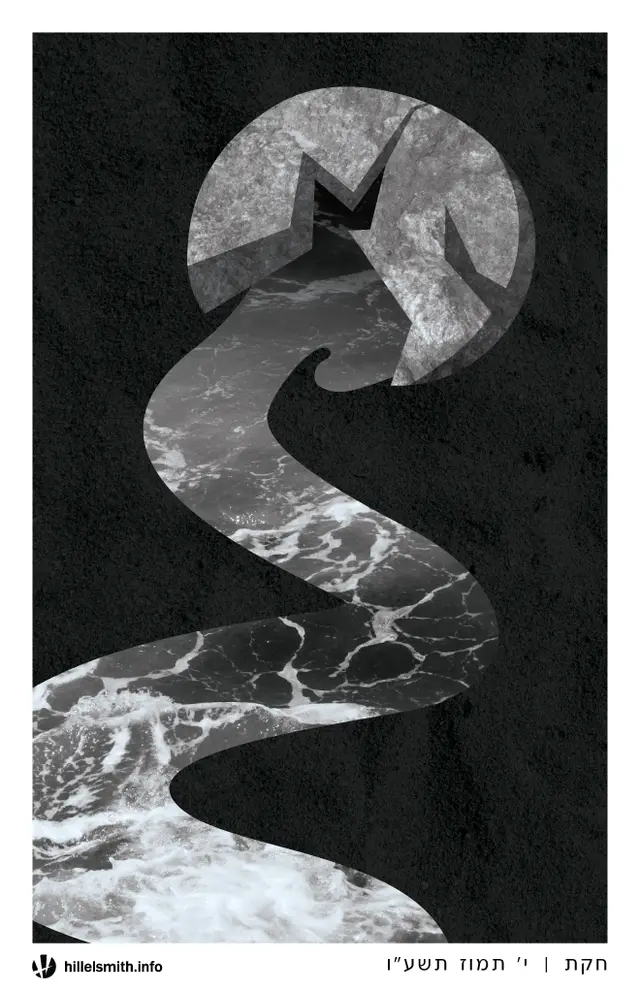
Artwork by Hillel Smith.

