Parshat Re'eh: The Blessing We Choose Together
This week’s Torah portion opens with a striking declaration: “See, I set before you today blessing and curse.”
This week’s Torah portion is called Re’eh, the Hebrew word for “See.” It opens with a striking declaration: “See, I set before you today blessing and curse.” At first, this can sound almost too simple — as though life were divided into two clean roads, and every good decision immediately led to a blessing.
But we know that life does not work that way. Good people suffer. Thoughtful choices can have painful consequences. The Torah is not promising that we can control everything that happens to us. It is insisting that we are not powerless within what happens.
Maimonides, the great 12th-century Jewish philosopher and physician, understands these verses as the foundation of human freedom: a person can choose what kind of action to take. We do not choose every circumstance, every limitation, or every burden we carry. But again and again, life places a decision before us: Will I respond with generosity or indifference? Will I tell the truth or take the easier path? Will I move toward another person or retreat into myself? “Blessing and curse” may not describe two kinds of lives. They may describe the possibilities hidden inside each ordinary moment.
Rabbi Eliyahu Dessler, a 20th-century Jewish teacher, offered an especially compassionate way to understand this. He taught that much of who we are has been “given” to us: our temperament, upbringing, environment, habits, and fears. Our freedom appears at what he called the bechirah point—the point of choice—where doing what we believe is right asks us to move beyond what has previously felt comfortable. The courageous choice is not the same for every person. For one person, it may be speaking up; for another, listening. For one, asking for help; for another, offering it. We exercise freedom when we take the next honest step available to us.
There is not just a personal message here for all of us, but a communal one too. An ancient Midrash distinguishes between the parts of the body that simply absorb the world—the eyes, ears, and nose—and the mouth, hands, and feet, through which we act upon it. Communities are shaped through these small instruments of choice: the mouth that learns someone’s name, the hands that set another place at the table, the feet that carry us across the room toward the person standing alone. A welcoming community does not appear by accident. It is built through hundreds of moments when someone chooses connection over comfort.
Re’eh asks us to see the choice that is before us today — not every choice we will ever face, and not the whole future at once. Just this word, this gesture, this step. We cannot determine everything that will happen in our lives, but we can help determine what happens between us. Perhaps that is the blessing the Torah places within our reach: not simply a blessing we receive, but a blessing we become for one another.
—
Welcome to Torah in Harlem! As we move through each week, we’ll explore the stories and insights of the weekly Torah portion—the ancient text at the heart of Jewish life—and let them inspire conversation in our community. Our hope is to cultivate a gathering place where learning belongs, reflection brings joy, and we can all grow together. Want to hop into the conversation? Join our Torah in Harlem Whatsapp Group.
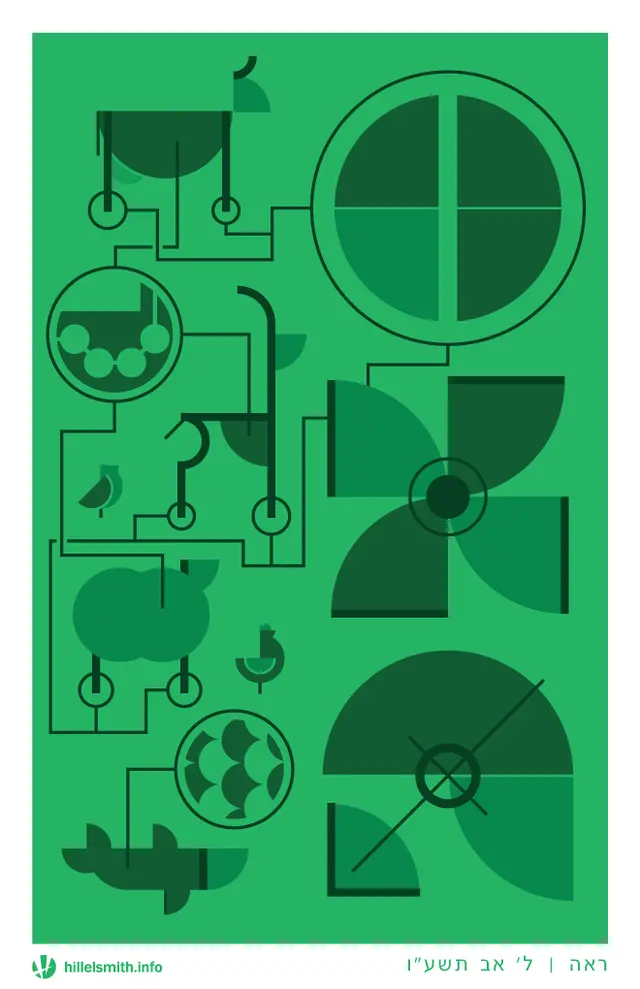
Artwork by Hillel Smith.

