And Then It Rained + Shemini Atzeret
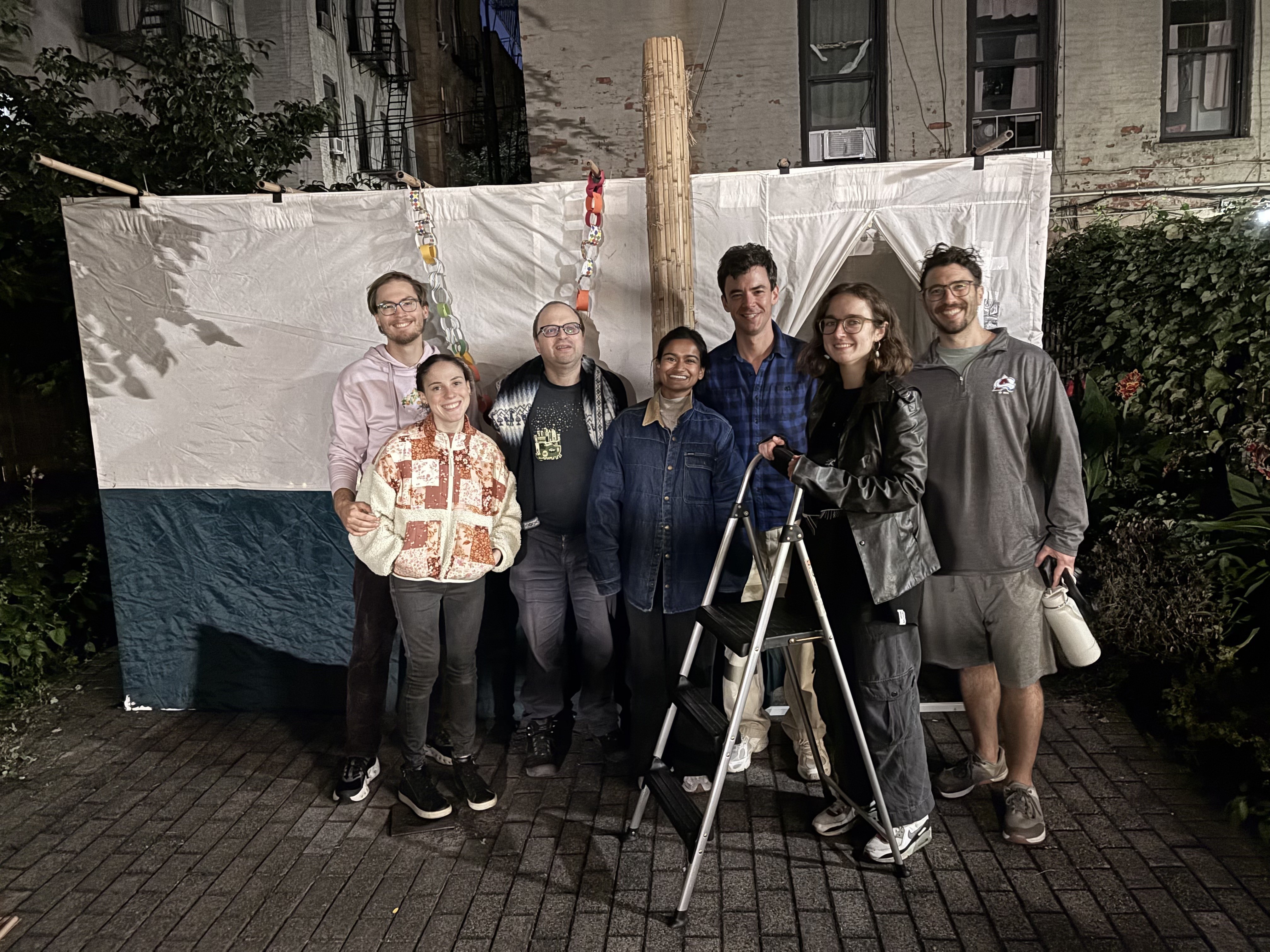
Apparently, we have a Sukkot tradition: we build a sukkah, fill it with people, and then it rains.
Apparently, we have a Sukkot tradition: we build a sukkah, fill it with people, and then it rains.
Years ago, on a Friday night of Sukkot, thirty rain-soaked people squeezed out of our Harlem sukkah and into our tiny one-bedroom apartment. The evening did not go according to plan. It also became one of the most important nights of our lives — the night Dimitry proposed 💍, surrounded by the community we had been slowly building around us.
We told that story recently on the Assembling Community podcast, in a conversation about Sukkot and community building, and about what happens when the thing you carefully planned suddenly takes on a life of its own.
And then, because apparently the universe enjoys a callback, it rained on us again this year.
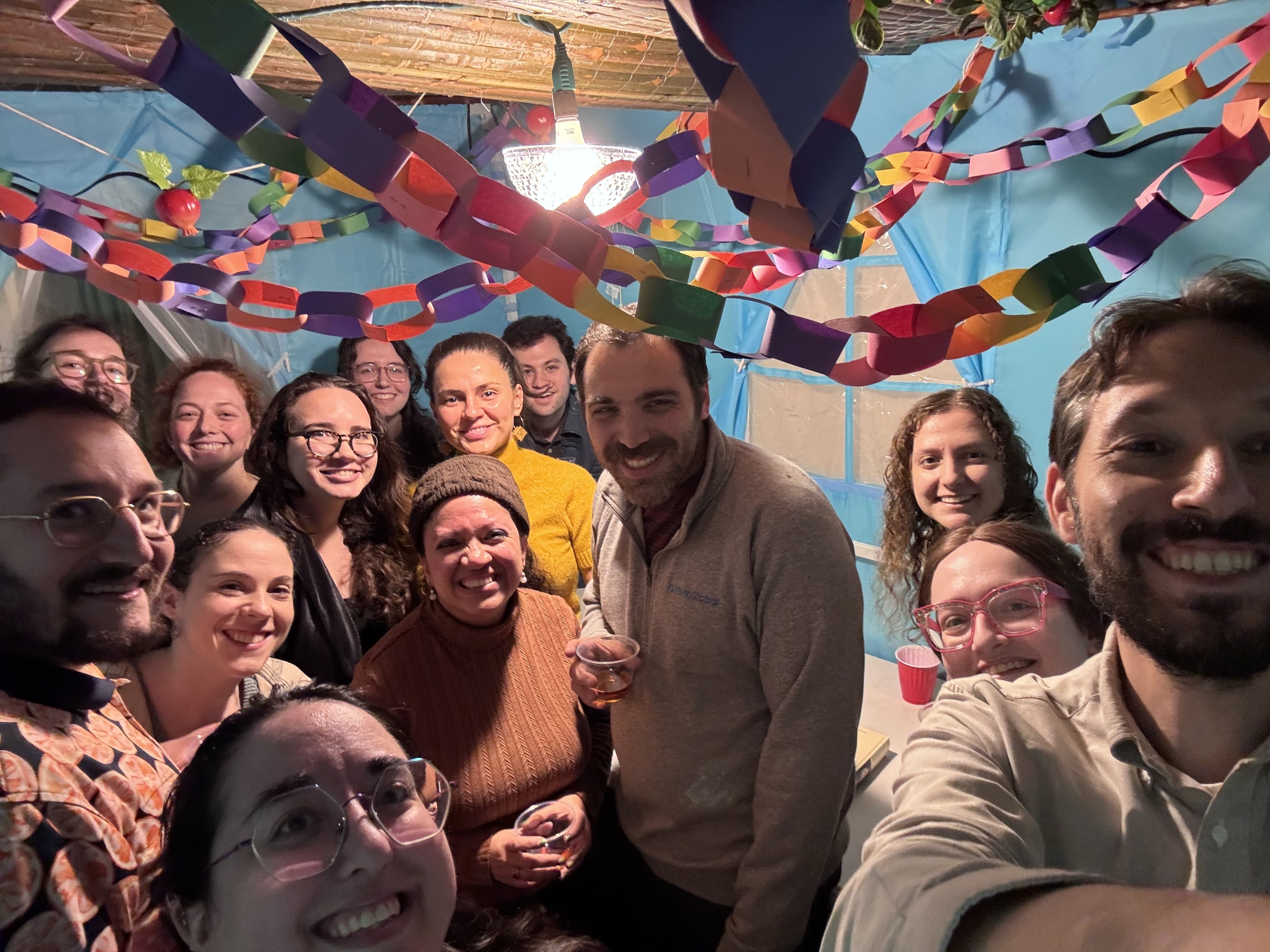
On the first night of Sukkot, dozens and dozens of us crowded into the sukkah together — eating and talking and celebrating beneath a roof designed, quite literally, to let the outside world in. Until the drops started falling, and falling harder, and eventually sent us scurrying inside.
On night two, we made it as far as a wonderfully soggy Kiddush in the sukkah before admitting defeat and moving the party indoors.
This is, of course, the whole strange brilliance of a sukkah.
We spend days building it. We schlep furniture into it. We decorate it and set the table and invite everyone we know. And then our tradition insists that we notice: this is not a house.
Its walls are temporary. Its roof is porous. The wind can get in. The rain can get in. We are supposed to be able to see the sky through the s’chach.
A sukkah gives us the faintest outline of a home — and then asks us to step bravely inside anyway.
There is something here about community, too.
We can build the structures. We can set the tables. We can make the plans and send the emails and think carefully about who will sit beside whom. We can create the conditions for something meaningful to happen.
But community is not a performance, and people cannot be choreographed. The weather changes. Someone new walks in. The conversation goes somewhere unexpected. The gathering you imagined becomes something else entirely.
Our work is not to make everything permanent or perfectly controlled. It is to build something sturdy enough to hold real life — and porous enough to let real life in.
We saw that all across our community this week. In our very full sukkah. Around the tables we hastily reconstructed indoors. And at Jess’s home, where our Social Committee hosted a Sipping Salon in her sukkah — another little temporary room where people could find one another.
And now, one more holiday is waiting for us.
This Friday night we’ll gather for Shemini Atzeret, which translates roughly as “the eighth day of assembly.” It comes immediately after the seven days of Sukkot, almost as though seven days together simply weren’t enough. Our tradition imagines God saying: Don’t go yet. Stay with Me one more day.
Both of us somehow made it all the way to adulthood without ever having heard of Shemini Atzeret — which, frankly, feels like excellent marketing for joining us Friday night.
It is a beautiful, slightly mysterious holiday devoted almost entirely to the idea that we are not quite ready to leave one another yet.
After all the building and eating, the rain and the rearranging, the guests and the glorious impermanence of Sukkot, we get one more night.
Come stay a little longer.